
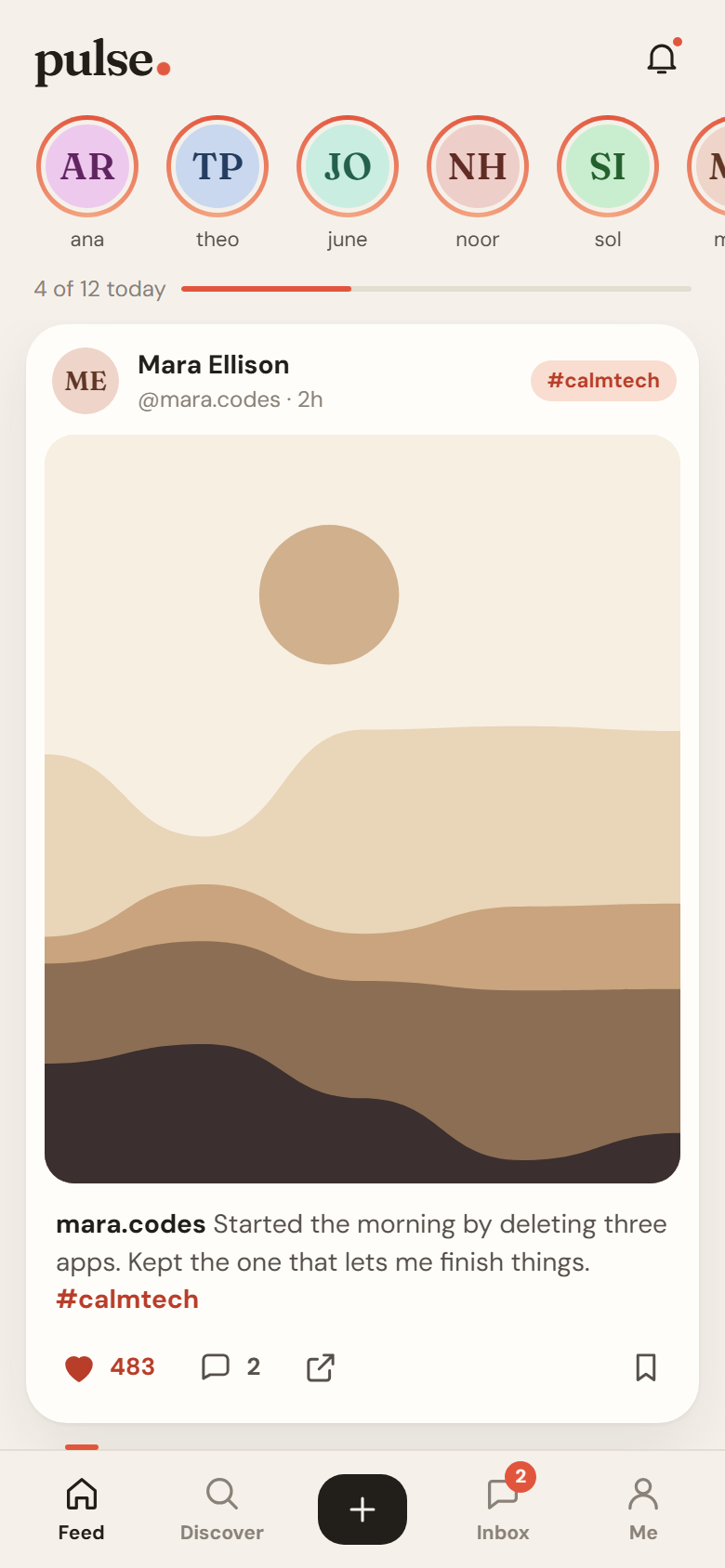
One post, full attention
The feed moves a page at a time and snaps to each post. A small bar shows how far through today you are, so the end is always in sight.
03 · UI/UX · Concept study · 2025
pulse
A calmer social app: one post at a time, reactions that take a beat, a feed you can finish, and notifications that arrive in digests instead of a drip. Designed and built end to end, from brand to working app.
01 / The problem
Social apps compete for time, so they're designed to be hard to put down. Pulse asks the opposite question: what would a social app look like if it were designed to let you leave, and feel good about it?
There's no bottom, so there's never a natural moment to stop.
Every ping arrives on its own and pulls you back in, one at a time.
Counting reactions turns sharing into performing.
A concept study, honestly framed. Pulse is self-initiated, not a shipped product, and there was no formal user research. The design starts from five principles and ends with the assumptions a real study would need to test.
02 / Principles
Each principle is a real feature in the app, not a setting buried three screens deep.
The feed moves a page at a time and snaps to each post. A small bar shows how far through today you are, so the end is always in sight.
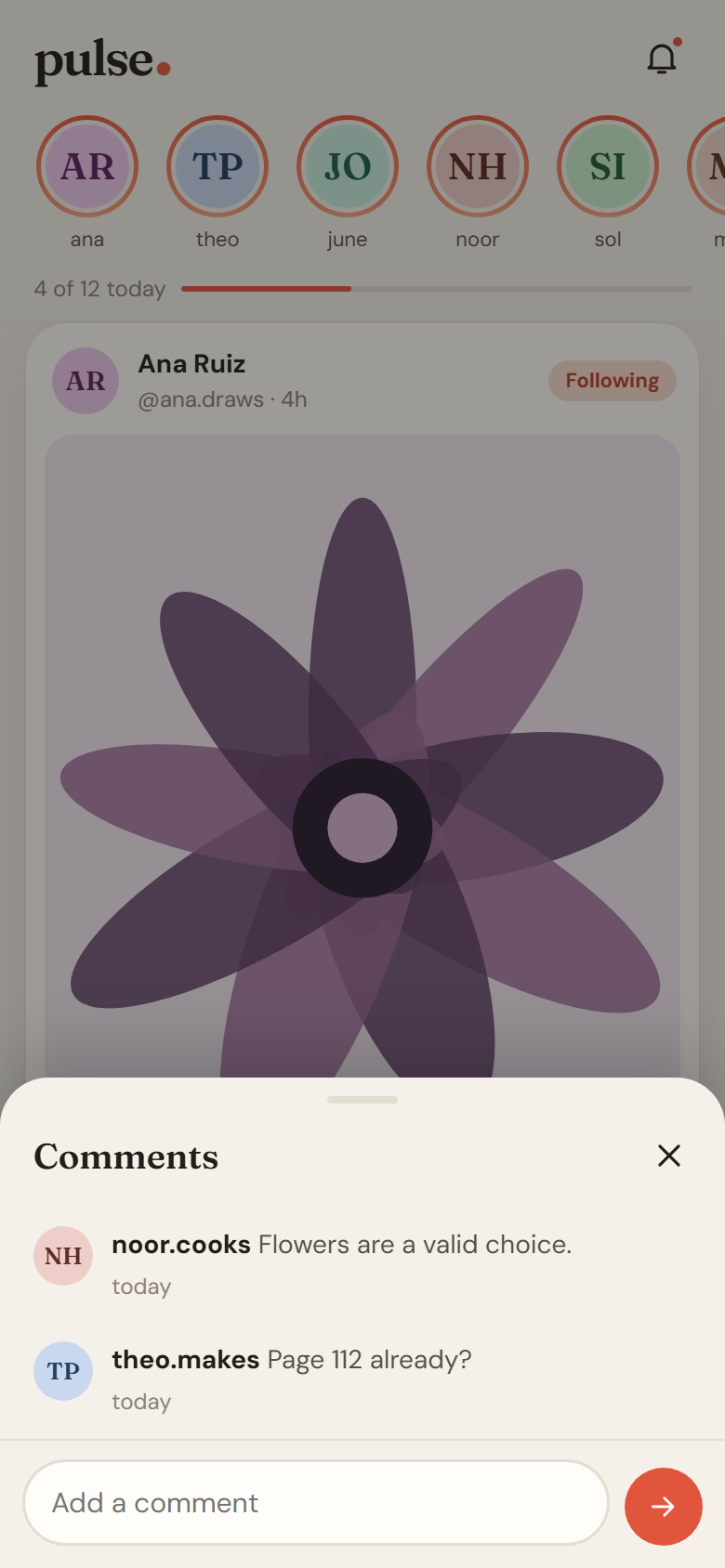
A like lands after a short pulse, about a third of a second. It's just long enough to make reacting a choice rather than a reflex. Try it:
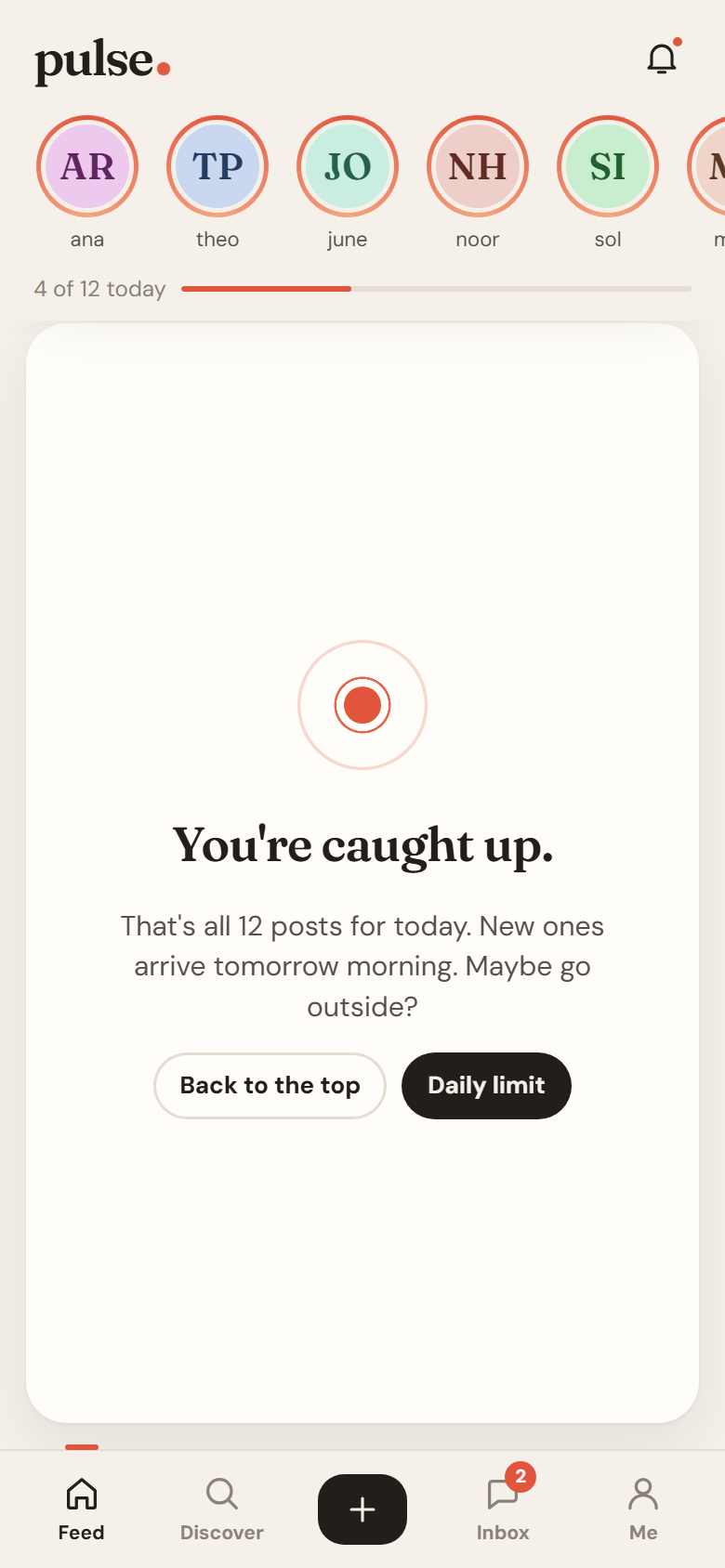
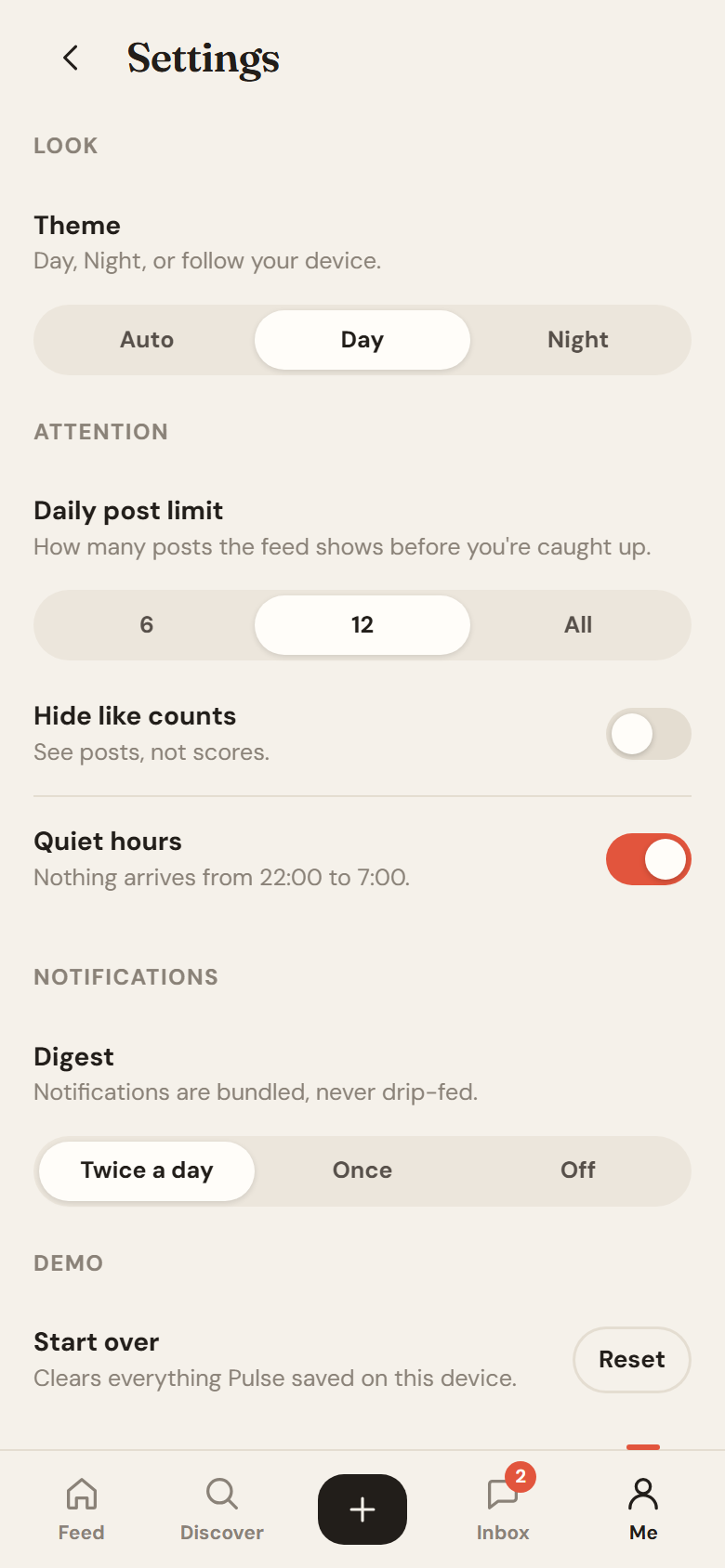
A daily limit of 12 posts (6, 12 or all, your choice) ends in a real stopping point, not a spinner. The inbox caps new conversations at three a day.
Activity arrives bundled, twice a day by default, so nothing interrupts you on its own. Even reactions to your own posts wait for the next digest.
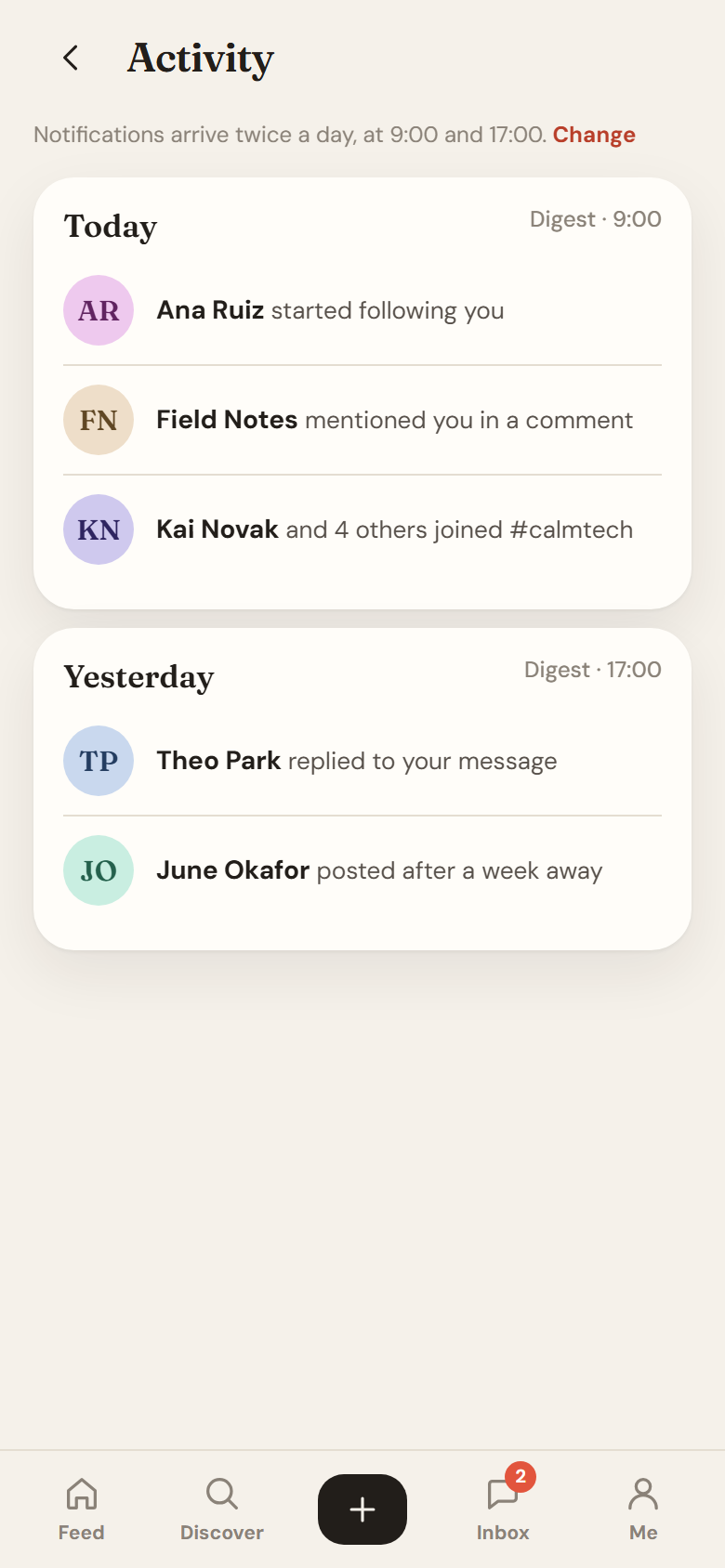
Hide like counts, set quiet hours, change the digest, or switch between Day and Night. The defaults are calm; the controls are yours.
03 / Brand
Pulse needed to feel like the opposite of a slot machine: soft surfaces, a bookish serif for its voice, and a single warm accent reserved for the moments that matter, like the beat of a like.
Wordmark
Lowercase Fraunces with a breathing ember dot. The dot is the brand: it pulses slowly, never blinks.

App icon · the ripple
Palette · Day
Palette · Night
Typography
Fraunces, 600The voice: headings, the wordmark, story text, the caught-up message.
AaDM Sans, 400 to 700The reading face: captions, buttons, settings, messages.
Motion
Imagery
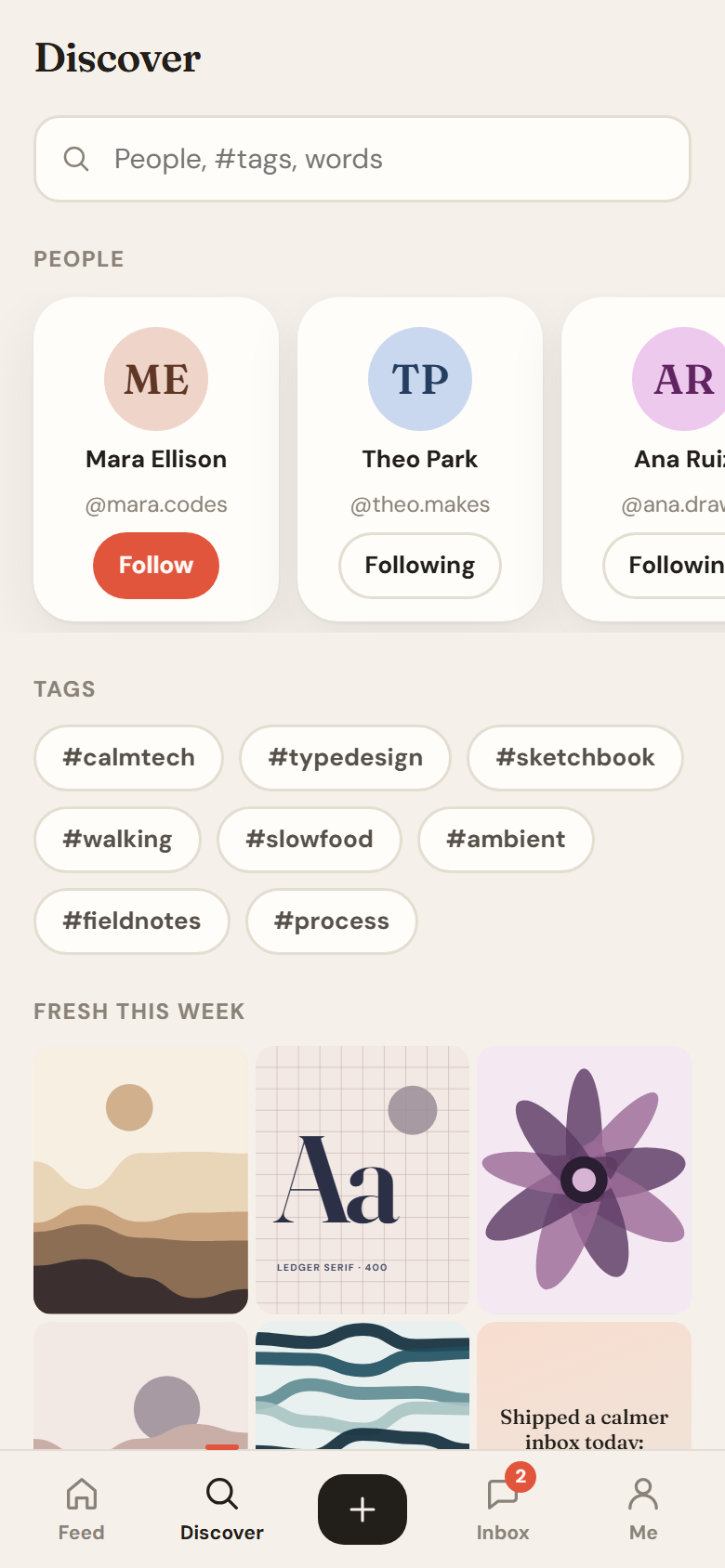
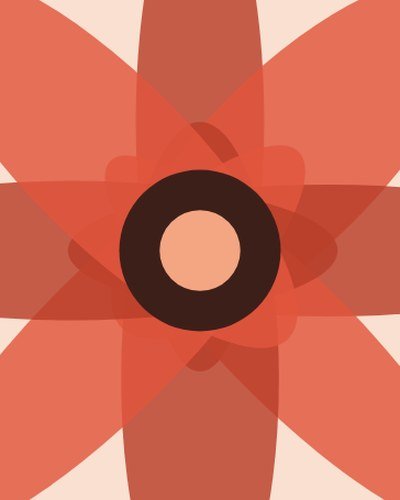
Every image in Pulse is drawn by code from a seed: dunes, orbits, blooms, tides, type specimens. They load instantly, never need licensing, re-colour for Night, and give a fictional community a consistent, gallery-like look.



04 / Screens
Every image here is a capture of the working app, not a mockup. Tap any screen to see it larger.
05 / Try it
This is the complete app, not a video. Everything you do is saved in your own browser, so your posts and likes are still here when you come back. Nothing is sent anywhere.
Finish onboarding. Pick three interests and choose a handle. Try one that's taken, like theo.makes.
Like a post, then double-tap one. Feel the beat before the like lands.
Open a story. Tap to skip, hold to pause, and send a reply.
Read to the end of the feed. Watch the progress bar fill, then get caught up.
Post something. Choose a canvas and palette, add a #tag, and find it in your feed and on your profile.
Message someone. They'll write back after a moment.
Change the rules. Hide like counts, lower the daily limit, or switch to Night in Settings.
Best on a phone: open Pulse full screen and add it to your home screen. To start over, use Settings → Reset.
06 / How it's built
Pulse is deliberately small: one HTML file, one stylesheet, one script. Small enough to read in an afternoon, complete enough to use.
// A like takes a beat: the heart pulses, then the like lands.
function like(id, fromMedia) {
  const post = postById(id);
  if (!post || pendingLikes[id]) return;
  if (fromMedia && post.liked) { burst(id); return; }
  pendingLikes[id] = true;
  likeButtons(id).forEach(function (b) {
    b.classList.remove("is-beat");
    void b.offsetWidth;
    b.classList.add("is-beat");
  });
  if (fromMedia) burst(id);
  window.setTimeout(function () {
    delete pendingLikes[id];
    post.liked = !post.liked;
    post.likes += post.liked ? 1 : -1;
    save();
    updatePostButtons(id);
    likeButtons(id).forEach(function (b) { b.classList.remove("is-beat"); });
  }, reducedMotion.matches ? 0 : 380);
}
07 / What I'd test next
Pulse makes bets about how people want to feel. Before building further, each one deserves a test with real users.
Some people may love a stopping point; others may feel shut out of their friends' posts.
Test: diary study over two weeks380ms is a guess. Too short and nobody notices; too long and it feels broken.
Test: A/B the delay at 0, 250, 380 and 600msThe cap protects attention but might need an exception for people you choose.
Test: interviews after a week of useBundling should lower the urge to open the app; it might just create two daily spikes.
Test: compare app opens per day, before and after